Please Press Pound. You’re on Ma’ane Koli
Today we’ll learn words and phrases you’ll hear on the phone while on hold, plus a tip how to quickly reach a real live customer service rep.
Read More: Please Press Pound. You’re on Ma’ane Koli

Today we’ll learn words and phrases you’ll hear on the phone while on hold, plus a tip how to quickly reach a real live customer service rep.
Read More: Please Press Pound. You’re on Ma’ane Koli
“It was preferable to restrict encounters with adherents of another faith and to be content, at least for the greater part of the way, to travel by sea.”
Read More: Painting within writing
תאומים are twins, from the root תאמ. This Hebrew root is also used for things relating to matching, fitting, and coordinating. Mat’im lachem?
Read More: Sometimes the Best Things Come in Pairs
“It was preferable to restrict encounters with adherents of another faith and to be content, at least for the greater part of the way, to travel by sea.”
Read More: A. B. Yehoshua’s green seas and yellow continents
The Hebrew word ‘sherut’ means ‘service,’ but the plural – ‘sherutim’ – is more commonly used to mean something quite different
Read More: Which Way to the ‘Sherutim’?
“Babies drop into the world, / like rain falling in the dark / from a gigantic hand into shafts, / into a spider’s tent, a cold apple.”
Read More: Nurit Zarchi’s Baby Blues
Why are some mistakes in a foreign language worse than others? Some things Hebrew learners say sound more cringy to the Israeli ear than others.
Read More: Mistakes That Make Israelis Cringe
“There’s nothing more frustrating than getting nuked while you’re putting the soap in the dishwasher.”
Read More: “The Seven Good Years” Part II: Bombs away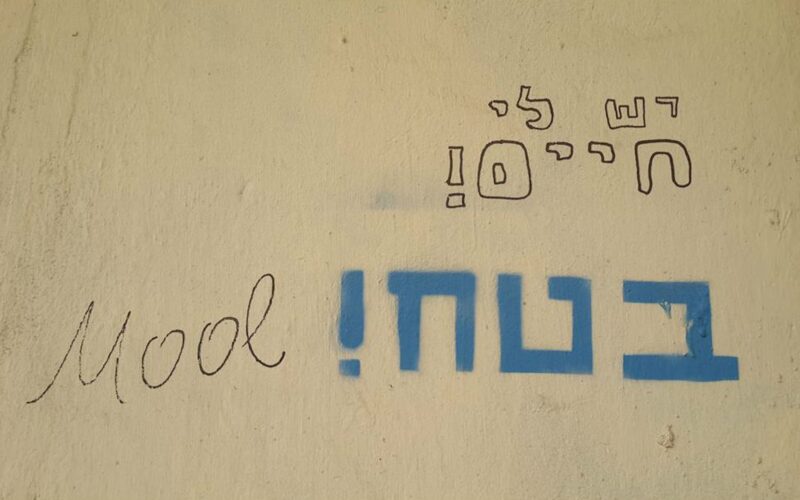
In Hebrew, בטח or בטוח – “sure” or “for sure” – are words we hear a lot on the Israeli streets, so we need to know how to use them properly
Read More: Safety, Security, and a Bit of Self-Confidence
“The Seven Good Years” is Etgar Keret’s memoir about the seven years between the birth of his son and the death of his father.
Read More: Etgar Keret’s “The Seven Good Years”: Part I