You Can’t Fire Me! I Quit!
There is a small yet significant difference between the Hebrew words פוטרתי and התפטרתי which share the common root פ.ט.ר. The former means “I was fired” and the latter means “I quit.”
Read More: You Can’t Fire Me! I Quit!

There is a small yet significant difference between the Hebrew words פוטרתי and התפטרתי which share the common root פ.ט.ר. The former means “I was fired” and the latter means “I quit.”
Read More: You Can’t Fire Me! I Quit!
In order to say “that’s irritating” or “I’m irritated” in Hebrew, we first need to learn the root ע.צ.ב, which gives us the word עצבים (nerves). There’s a lot of slang in this episode, so buckle up!
Read More: Come On, Don’t Be Irritating
The Hebrew root ת.ל.ה gives us the words לתלות (to hang), תלה (hung), and תלוי (hangs). So why does זה תלוי mean “it depends”? On this episode, Guy won’t leave you hanging as he explains all things ת.ל.ה.
Read More: Hung Out to Dry
Shlita (שליטה) means control. So why do people graffiti שולט or שולטת on walls? And how do we say, “where’s the remote?” in Hebrew? Guy takes control of the situation and explains.
Read More: Anyone Seen the Remote?
Shtiya means drinking, but it could also mean beverages. In the last Israeli elections, political pundits spoke about shtiyat kolot, ‘votes drinking.’ What does it mean, and how did this saying make the jump from army slang to civilian slang?
Read More: Drink Up
In Hebrew dugma (דוגמה) is “an example,” and ledugma (לדוגמה) means “for example.” This root, d-g-m, is quite handy and from it we derive words and phrases like fashion model, sample, and the perfect husband.
Read More: Setting a Good Example
How many followers (עוקבים) do you have on Facebook? What about Instoosh? Twitter? And what do high heels (עקבים) have to do with social networks? Well, not much except that they share a common Hebrew root. Follow closely as Guy talks about followers, following, follow up, and so much more.
Read More: High Heels and Social Media Followers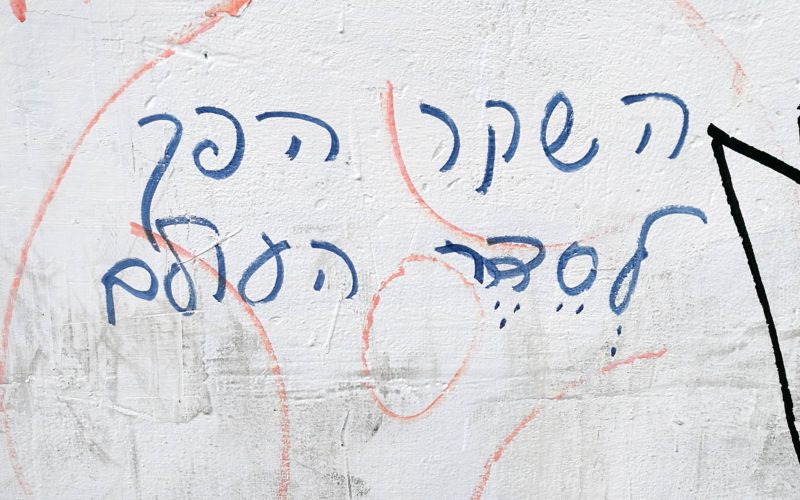
We’re getting ever closer to elections day in Israel. Over the past few weeks, every time we turned on the news we heard politicians calling one another a liar. How do we say “liar” in Hebrew? How do we say “white lies?” Guy tells the truth, the whole truth, and nothing but the truth about the root “sheker” (ש.ק.ר).
Read More: Tell Me Sweet Little Lies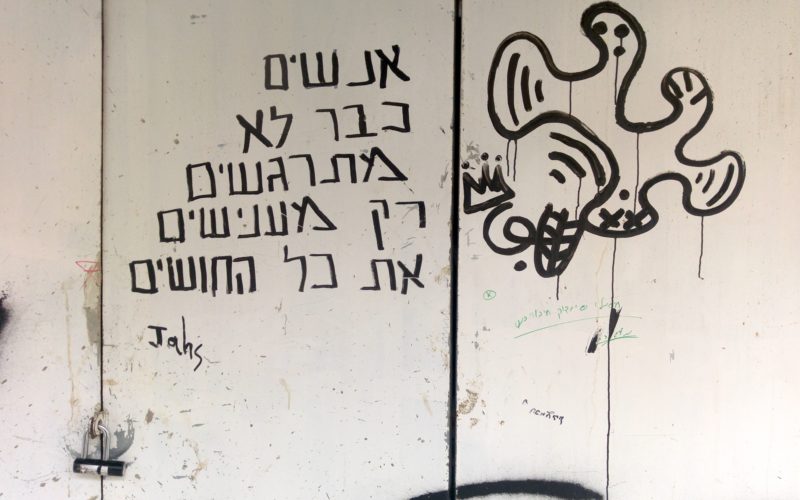
It’s time we talk about our emotions, our feelings. On this episode, Guy sets aside his feelings to talk about the Hebrew root r-g-sh.
Read More: Let’s Talk About Our Feelings
The Hebrew root מ.ש.כ (mashach) pulls together seemingly unrelated matters like gravity, ATMs, and the act of stalling for time. Mashach is highly resourceful and provides plenty of interesting uses and meanings. As always, Guy provides some serious slang insight.
Read More: Pulling It All Together